
Former Venezuelan Minister Alex Saab Charged Again in US Money Laundering Case Following Return to American Custody
Former Venezuelan Industry Minister Alex Saab appeared before a federal court in Miami on Monday, where US authorities formally reinstated money laundering charges against the Colombian-born businessman and former Venezuelan government envoy.
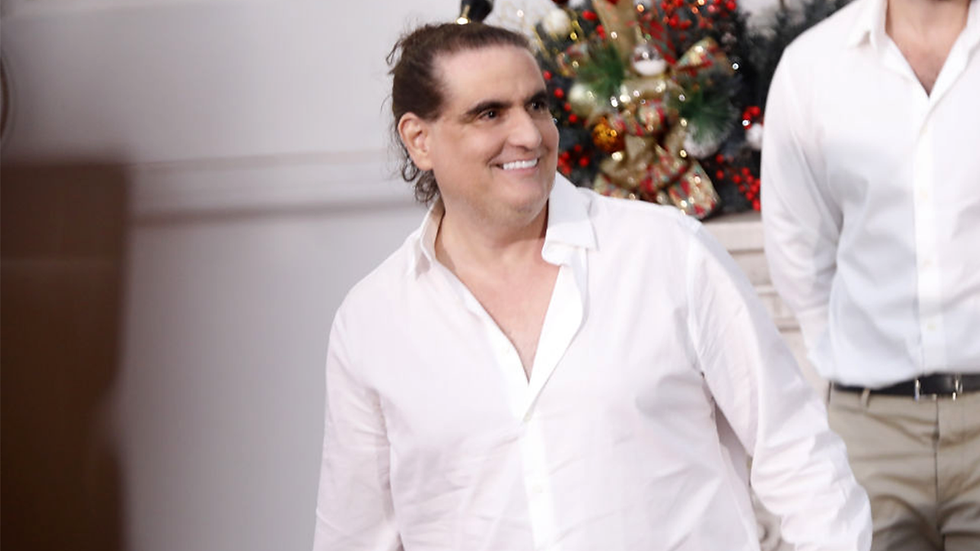
The allegations stem from accusations that Saab participated in the misappropriation of funds tied to Venezuelan government contracts, including the CLAP subsidized food distribution program established to assist the country’s most vulnerable populations.
Saab’s latest prosecution comes after his “deportation” from Caracas on Saturday. Although he had previously faced charges in the United States in 2021, he was pardoned in 2023 by former US President Joe Biden as part of a prisoner exchange agreement involving Venezuela.
In the renewed case, Saab is also accused of conspiracy to conduct financial transactions through the US banking system while allegedly concealing and disguising the origins of the funds involved.
US Deputy Attorney General Andrew Tysen Duva stated that Saab “allegedly used US banks to launder hundreds of millions of dollars stolen from a Venezuelan food program and from profits generated through the illegal sale of Venezuelan oil.”
American prosecutors further accuse the former minister, who also served as a diplomatic representative for President Nicolás Maduro’s administration, of “secretly using shell companies, fraudulent invoices, falsified shipping records and other fabricated documents.”
According to the US Department of Justice, “from 2019 through at least January 2026, the conspiracy expanded as US economic sanctions crippled Venezuelan exports, especially oil.” If convicted on the current charges, Saab could face a prison sentence of up to 20 years in federal custody. Authorities confirmed that he will remain detained without bail ahead of his next court appearance, scheduled for June 24.
Saab first came under US custody in 2020 after being arrested during a refueling stop in Cape Verde at the request of Washington. At the time, he was reportedly traveling to Iran to negotiate food and fuel imports for Venezuela amid severe shortages affecting the country.
The Venezuelan government subsequently launched a large-scale international solidarity and public relations campaign condemning Saab’s detention and eventual extradition to the United States. Caracas elevated his release to a central foreign policy objective and even temporarily suspended negotiations with opposition sectors backed by Washington.
Throughout the legal battle, Saab’s defense focused heavily on claims of diplomatic immunity and on his alleged role in helping Venezuela bypass US sanctions to secure essential imports.
Following his release in the 2023 prisoner exchange, Saab was appointed Venezuela’s industry minister in October 2024. However, Acting President Delcy Rodríguez removed him from the position in January, only weeks after the US military strikes and the kidnapping of Nicolás Maduro.
Speculation that Saab had been detained by Venezuelan security services began circulating publicly in February, although authorities neither confirmed nor denied the reports at the time. After his transfer to US agencies became public, several senior Venezuelan officials appeared to distance themselves from the former envoy.
On Monday, Delcy Rodríguez defended the decision to hand Saab over to US authorities, framing the move as an administrative action aligned with Venezuela’s broader national interests.
“Any decision taken by the national government will be made in Venezuela’s interest (…) Alex Saab is a citizen of Colombian origin, he carried out functions in Venezuela, and these are matters between the United States of America and him,” Rodríguez declared during a televised appearance. She further stated that the criminal proceedings now unfolding are an issue “between the US and Saab.”

Meanwhile, National Assembly President Jorge Rodríguez claimed that Saab had maintained “ties” with “US agencies” dating back to 2019.
“We are only learning about this now (…) All of you will soon find out what kind of relationship Saab had and still has with those agencies,” Rodríguez stated during a parliamentary session on Tuesday.
The assembly president, who had personally spent three years leading negotiations intended to secure Saab’s release from US custody, insisted that he was acting under direct instructions and that it was “not his place” to investigate Saab’s past activities or determine whether he had committed crimes.
At the same time, Interior Minister Diosdado Cabello alleged that Saab had fraudulently obtained Venezuelan nationality in 2004 and later went on to “defraud” the country.
“He is not Venezuelan, he is a citizen of Colombian origin,” Cabello stated during a Monday press conference. “He always presented an illegal Venezuelan ID card that has no backing from the immigration services.”
The remarks made by top Venezuelan officials immediately triggered criticism and skepticism across social media platforms. Users circulated Supreme Court rulings recognizing Saab’s Venezuelan nationality while questioning how authorities could have failed to verify his legal status before appointing him to high-ranking government positions.
Saab’s renewed prosecution in the United States has also reportedly coincided with the opening of a fresh criminal investigation targeting Nicolás Maduro.
According to CBS News, US officials have expressed concern that the existing case against the kidnapped Venezuelan president in New York may be “weak,” leading federal prosecutors in Florida to initiate a separate investigation. It remains unclear whether prosecutors intend to connect the new case directly to Saab, whom Washington has repeatedly accused of acting as Maduro’s “financial operator.”
Reports indicate that the latest investigation was launched in March and is being overseen by prosecutor Michael Berger, a specialist in international criminal prosecutions. The probe also reportedly involves FBI agents, Homeland Security investigators, and members of the Internal Revenue Service’s criminal investigation division.
Nicolás Maduro and First Lady Cilia Flores have both pleaded not guilty to accusations that include conspiracy related to drug trafficking. Proceedings in their case are currently scheduled to resume on June 30.
By fLEXI tEAM


Comments