
United States Imposes Sweeping Sanctions on Iranian Financial Network Accused of Laundering Billions Through Global Front Companies
United States authorities have unveiled a far-reaching sanctions action involving the blocking of hundreds of millions of dollars in assets connected to an extensive network of Iranian currency exchange businesses and offshore front companies. The enforcement effort targets individuals and organizations accused of orchestrating sophisticated financial structures that enabled the Iranian government and its military-linked entities to circumvent international anti-money laundering controls. According to investigators, the network facilitated the movement of billions of dollars each year, concealing illicit state-sponsored financial activity through elaborate layering techniques spanning numerous jurisdictions. Officials allege that these mechanisms successfully integrated restricted funds into the global financial system while avoiding detection by international compliance and regulatory authorities.
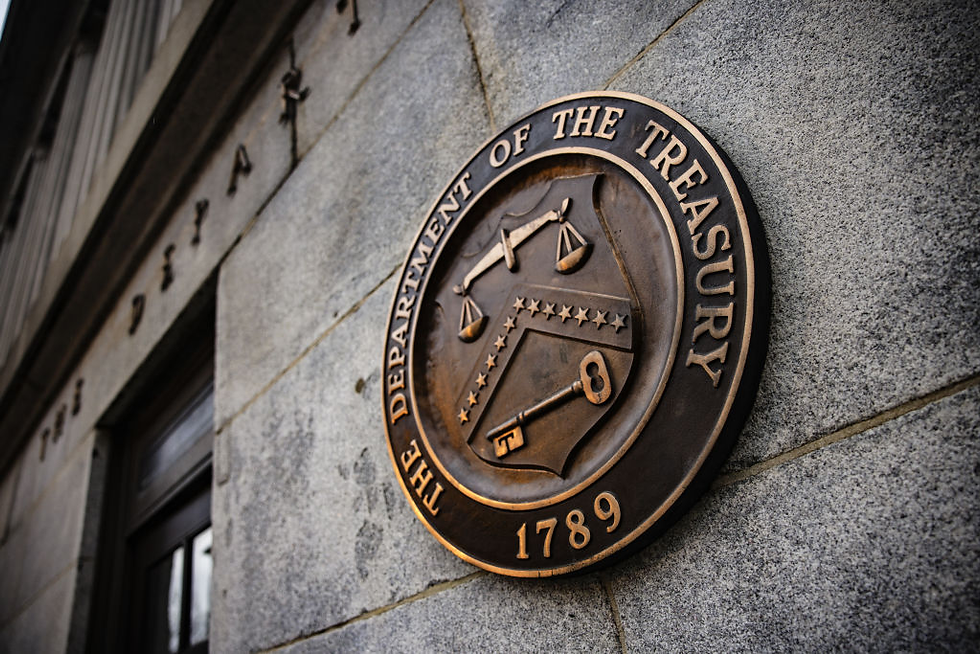
The Office of Foreign Assets Control implemented the sanctions under several existing legal authorities intended to combat terrorism financing and state-sponsored sanctions evasion. The designations were issued pursuant to Executive Order 13902, which targets persons operating in significant sectors of Iran's economy, in addition to Executive Order 13876 and Executive Order 13224. According to regulators, the network functioned as an alternative international financial infrastructure that enabled sanctioned Iranian state entities to continue accessing foreign currency despite extensive international restrictions. Authorities stated that the system relied on manipulating merchant accounts and coordinating large-scale cross-border cash transfers to disguise the true origin and destination of funds.
At the center of the operation, investigators identified international businessman Ali Ansari, who formerly headed Ayandeh Bank before the institution entered bankruptcy proceedings. Following the bank's collapse, officials said Ansari redirected his activities through specialized non-bank financial intermediaries in order to continue facilitating illicit financial transactions. Utilizing multiple citizenships, including those of Cyprus and Saint Kitts and Nevis, he allegedly established numerous offshore companies that served as corporate fronts for the movement of funds. These entities were incorporated in jurisdictions recognized for relatively flexible corporate registration frameworks, allowing the network to obscure beneficial ownership information while preserving access to international financial clearing systems.
Authorities stated that the broader financial infrastructure depended heavily on a network of unofficial currency exchange houses operating inside Iran. These exchange businesses reportedly entered into formal arrangements with sanctioned financial institutions to receive, convert, hold, and transfer substantial amounts of foreign currency on their behalf. By concentrating these assets within privately operated exchange houses, the network effectively shielded sanctioned state-controlled institutions from direct scrutiny by international regulators. Investigators said the scale of the operation was considerable, with individual exchange houses reportedly holding foreign currency balances exceeding 117 million dollars for prohibited Iranian entities.
Officials also detailed the participation of numerous individuals responsible for overseeing the daily operations of these currency exchanges. In Shiraz, the organization known as Mohsen Khandan and Partners General Partnership Company, commonly referred to as Khandan Exchange, allegedly served as one of the principal coordination centers within the network. Authorities identified Mohsen Khandan and Ali Asghar Khandan as the controlling partners responsible for managing the business. According to the sanctions announcement, the exchange maintained ongoing business relationships with several sanctioned Iranian financial institutions, including Parsian Bank, Export Development Bank, Bank Saderat, Bank Sepah, Sina Bank, Karafarin Bank, Saman Bank, and Tejarat Bank.
Additional operations were allegedly conducted in Tehran through Lavasani and Partners General Partnership Company. Investigators identified Ahmad Navai Lavasani and Amir Navai Lavasani as the individuals directing the firm's activities, alleging that they coordinated the transfer of hundreds of millions of dollars in foreign currency for sanctioned clients. Authorities stated that the brokerage maintained relationships with several major Iranian financial institutions subject to international restrictions, including Bank Melli, Shahr Bank, Eghtesad Novin Bank, Tourism Bank, Bank Pasargad, and Bank Mellat. Investigators also named Mohammad Darbani and Partners Exchange General Partnership Company as another significant component of the network. According to the designation, Mohammad Darbani, Shokufeh Rostam Abadi, and Zahra Sarshari managed the exchange while overseeing tens of millions of dollars in restricted foreign currency holdings connected to sanctioned entities.

To introduce these funds into international markets, officials alleged that the domestic exchange houses relied upon an extensive network of offshore intermediary companies operating in third countries. These corporate entities were established in major commercial and financial centers, including Hong Kong, Dubai, and other locations within the United Arab Emirates. Authorities identified CDM Trading Limited, headquartered in Hong Kong, and Naba Alzaki Raw Materials Trading LLC in the United Arab Emirates as front companies created to facilitate trade-based financial transactions designed to resemble legitimate commercial activity. Investigators also identified Smart Global Limited, incorporated in Saint Kitts and Nevis, as another offshore company allegedly used to receive, redistribute, and conceal funds under the appearance of international investment operations.
Officials described the identification and disruption of these sanctions evasion mechanisms as a major achievement for international financial intelligence and enforcement efforts. By focusing on the non-bank financial institutions supporting the broader network, regulators said they are targeting the infrastructure that enables sanctioned actors to bypass traditional banking restrictions. Investigators explained that they were able to reconstruct the relationships between domestic exchange houses and foreign front companies by integrating information obtained from corporate registration records, international financial transaction data, and intelligence reporting. Authorities noted that this investigative approach reflects the growing importance of monitoring alternative financial channels that exist outside the conventional banking system.
The sanctions carry immediate and significant consequences for individuals and businesses operating within the international financial system. Under the enforcement measures, all property and property interests belonging to the designated individuals and entities that are located in the United States or under the control of United States persons must be blocked and reported to the appropriate federal authorities. In addition, foreign financial institutions that knowingly conduct or facilitate significant transactions involving the sanctioned parties may themselves become subject to secondary sanctions, potentially resulting in the loss of access to the United States financial system and its clearing infrastructure. Regulators emphasized that these provisions are intended to encourage stronger customer due diligence and compliance measures throughout the global financial sector.
The enforcement action also serves as a warning to financial institutions, compliance professionals, and multinational businesses regarding the risks posed by third-party payment intermediaries and offshore shell companies. Authorities stressed that the increasing use of legitimate commercial structures to disguise illicit financial activity requires more advanced and adaptive transaction monitoring practices. Financial institutions are encouraged to move beyond traditional checklist-based compliance programs and implement sophisticated behavioral monitoring tools capable of identifying irregularities in trade documentation, unusual pricing structures, and suspicious geographic transaction routes. Regulators maintain that only through continuous improvement of compliance and financial intelligence capabilities can the international financial system effectively protect the integrity of legitimate global commerce from increasingly sophisticated sanctions evasion and money laundering networks.
By fLEXI tEAM



Comments