
Thailand Strengthens Insurance Sector Defenses Through Enhanced Anti-Money Laundering Partnership
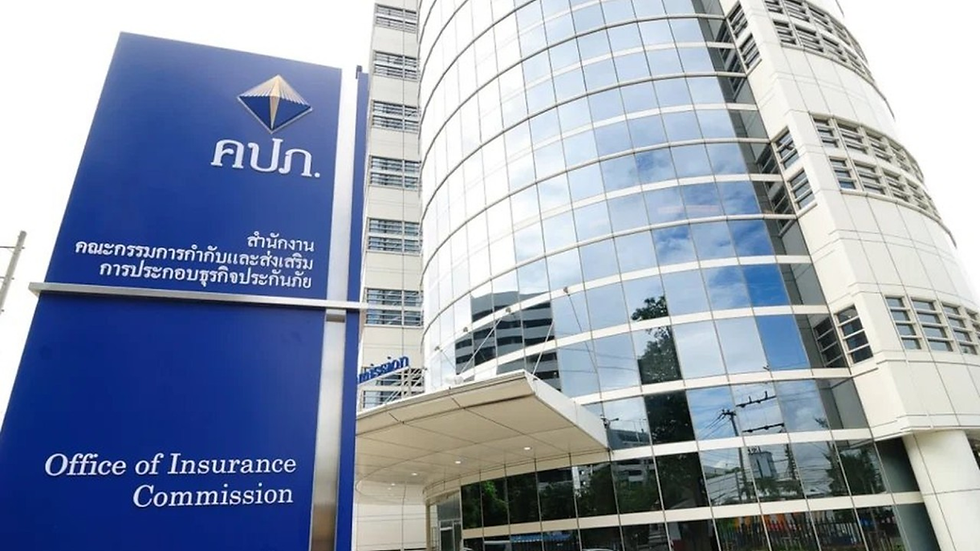
Thailand’s Office of Insurance Commission (OIC) and the Anti-Money Laundering Office (AMLO) are advancing a coordinated regulatory initiative aimed at strengthening the country’s insurance sector against financial crime while aligning domestic compliance standards with internationally recognized anti-money laundering frameworks. The joint effort is designed to address vulnerabilities across both life and non-life insurance markets that may be exploited by organized criminal groups operating across borders. Through tighter regulatory supervision, enhanced customer due diligence requirements, expanded intelligence-sharing arrangements, and stronger institutional accountability, authorities seek to reinforce the integrity of the nation’s financial ecosystem and prevent the infiltration of illicit capital into legitimate economic channels.
The initiative reflects a broader commitment to improving oversight within an industry that manages significant volumes of capital through long-term policies, investment-linked products, and substantial premium payments. Because of the scale and complexity of these financial arrangements, the insurance sector remains an attractive avenue for individuals seeking to disguise the origins of illegally obtained funds. Regulatory authorities have therefore emphasized the need for insurance companies and related market participants to establish comprehensive internal control systems capable of identifying suspicious activity before it can threaten the stability of the wider financial system.
Officials believe that integrating stronger monitoring and compliance mechanisms across the industry will help eliminate regulatory weaknesses that criminal organizations have historically exploited. The enhanced framework requires insurance providers and intermediaries to develop internal safeguards that enable the detection of unusual transactions, suspicious client behavior, and inconsistencies in the economic rationale behind complex financial arrangements. By implementing these measures, supervisory authorities aim to reduce opportunities for domestic and international criminal networks to use insurance products as tools for laundering illicit proceeds.
A central objective of the collaboration between the OIC and AMLO is to strengthen defenses against sophisticated laundering schemes that rely on corporate structures to conceal the identity of beneficial owners. Regulators have identified uneven implementation of customer due diligence standards among brokers, agents, intermediaries, and insurers as a long-standing vulnerability within the market. To address this issue, authorities are introducing a more uniform compliance framework that obliges insurance companies and related service providers to examine not only customer identities but also the economic purpose and legitimacy of complex corporate accounts.
This enhanced approach moves beyond traditional identification procedures and requires ongoing evaluation of customer relationships, ownership structures, and sources of funds. Rather than treating due diligence as a one-time onboarding exercise, firms will be expected to continuously assess risk throughout the duration of a business relationship. Regulators believe that maintaining a persistent focus on the origins of assets and the nature of customer activity will create a significantly more challenging environment for those attempting to channel illicit funds through legitimate insurance products.
The modernization of compliance standards is also closely linked to Thailand’s broader ambition of meeting international supervisory expectations. As financial markets become increasingly interconnected, weaknesses in anti-money laundering controls can have consequences that extend far beyond national borders. Authorities recognize that inadequate enforcement may undermine investor confidence, discourage foreign investment, and expose the country to reputational and economic risks within the global financial system.
In anticipation of future international assessments, regulators are placing increased emphasis on demonstrating that every segment of the financial sector possesses the practical capability to detect and disrupt money laundering activities. As a result, supervisory agencies are conducting detailed evaluations of existing legal and regulatory frameworks to determine whether statutory requirements are being effectively translated into real-world compliance practices. The focus is not solely on the existence of laws but on their operational effectiveness within corporate environments.
A key component of the enhanced supervisory model is the expansion of transaction monitoring and reporting capabilities. Insurance companies and related entities are expected to deploy automated systems capable of identifying unusual patterns and generating alerts when suspicious activity occurs. Examples of potentially suspicious behavior include large premium payments followed by rapid policy cancellations, as well as premium funding arrangements involving third-party accounts located in jurisdictions that present elevated risk. Such systems are intended to provide early warning indicators that enable compliance personnel and regulators to intervene before illicit funds become embedded within the legitimate economy.
Equally important is the strengthened coordination between the insurance regulator and the national anti-money laundering authority. Authorities are working to ensure that information can move efficiently between agencies, eliminating gaps that may arise when regulatory responsibilities are divided among separate institutions. This integrated approach is intended to provide investigators with a more complete view of financial activity and enable them to track suspicious funds as they move through banking systems, insurance products, corporate entities, and long-term investment vehicles.
Long-term stability within the financial sector remains a primary objective of the initiative. To achieve this, regulators are developing permanent mechanisms for intelligence sharing and policy coordination that will allow supervisory bodies to respond quickly to emerging threats. Formal agreements currently under development will establish enduring channels through which law enforcement agencies, financial regulators, and industry participants can exchange information and update compliance standards in response to evolving criminal methodologies.
This framework is designed to ensure that when new forms of financial crime are detected in one area of the financial system, appropriate countermeasures can be rapidly introduced across other sectors. Regulators believe this proactive approach will prevent insurance products from becoming alternative targets for criminals whose activities have already been restricted within traditional banking institutions or digital asset markets.
The reforms also place considerable responsibility on corporate leadership. Insurance companies and related businesses are expected to invest significantly in employee education, compliance infrastructure, and internal auditing programs. Regulators have indicated that senior executives and board members will face heightened scrutiny regarding their oversight of anti-money laundering controls. Where systemic compliance failures occur, authorities intend to hold leadership directly accountable through administrative and financial penalties.

By encouraging a culture centered on regulatory compliance, transparency, and risk-based decision-making, policymakers aim to strengthen the resilience of the domestic financial sector while preparing the industry for increasingly demanding international evaluations. Officials believe that these reforms will not only enhance regulatory readiness but also protect the broader economy from the destabilizing effects of criminal financial activity.
As part of the initiative, regulators have highlighted several common money laundering typologies that continue to present risks within the insurance marketplace. One frequently observed method involves the early termination of insurance contracts. In this scenario, an individual acquires a high-value policy or investment-linked product using illicit funds, then quickly cancels the contract during the allowable cooling-off period. The resulting refund from the insurer effectively transforms the original funds into a payment that appears to originate from a legitimate financial institution.
Another significant risk involves third-party premium funding arrangements. Under this model, a policy may be issued in the name of a legitimate individual or company while premium payments are consistently made by unrelated third parties or offshore entities. Such arrangements can obscure the identity of the true source of funds and complicate efforts to determine who is ultimately financing the policy.
Regulators have also identified premium overpayment schemes as a potential money laundering technique. In these cases, policyholders intentionally pay substantially more than the required premium amount and later request that the excess funds be refunded to a different bank account. This process can effectively transform an insurance provider into an unwitting intermediary for transferring funds between accounts.
The use of secondary brokers and loosely regulated intermediaries represents another area of concern. Criminal actors may deliberately conduct transactions through independent agents or third-party brokers that apply weaker customer due diligence procedures than primary insurance providers. By exploiting these weaker controls, individuals can gain access to insurance products while avoiding more rigorous compliance scrutiny.
Authorities have further warned about the assignment of policy benefits as a potential mechanism for transferring illicit value. Under this approach, an individual purchases a high-value single-premium policy and subsequently transfers the legal rights associated with the policy to an unrelated person or corporate entity, often located in another jurisdiction. Such arrangements may facilitate the movement of value across borders without triggering the same level of scrutiny typically associated with traditional banking transactions.
Through the implementation of enhanced supervision, stronger due diligence obligations, expanded intelligence-sharing mechanisms, and greater executive accountability, Thailand’s regulatory authorities are seeking to create a more resilient insurance sector capable of identifying and preventing financial crime. The collaboration between the Office of Insurance Commission and the Anti-Money Laundering Office represents a significant step toward strengthening national defenses against money laundering while supporting broader efforts to align the country’s financial sector with international compliance expectations.
By fLEXI tEAM


Comments