
Russia’s War Economy Is Starting to Test the Banking System Sanctions Failed to Break
Russia’s banking sector has so far survived years of Western sanctions, capital restrictions and wartime pressure.
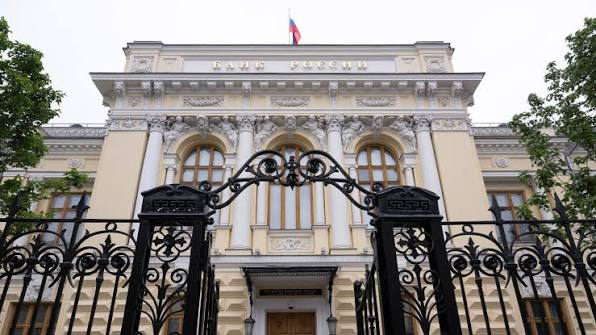
But the longer the war continues, the more the pressure appears to be moving from the sanctions list into the balance sheets of the country’s own banks.
A European intelligence assessment reported by Reuters warns that Russia could face a potentially serious banking crisis in 2026, as the cost of the war in Ukraine forces the state to lean more heavily on banks to support companies, households and defence-linked borrowers. The report points to rising bad loans, growing household debt and systemic vulnerabilities masked by state-backed lending and credit-support programmes.
The warning does not mean a banking collapse is inevitable. Russian officials continue to argue that the system remains stable, and major banks have adapted to the post-2022 sanctions environment. But the new concern is that Russia’s financial system is no longer only absorbing external restrictions. It is also absorbing the internal cost of a war economy.
Sanctions Did Not Break the Banks, But the War Is Changing the Risk
Western sanctions after the invasion of Ukraine were designed to restrict Russia’s access to global finance, weaken its banking system and isolate parts of the economy from international markets. Russia’s largest banks were cut off from many Western channels, access to capital markets was restricted, and financial sanctions became a central part of the pressure campaign.
Yet the system did not collapse. Russia imposed capital controls, redirected trade flows, relied more heavily on non-Western partners and used state intervention to stabilise key sectors. Major banks continued to operate, and the Kremlin repeatedly presented banking stability as evidence that sanctions had failed.
That argument is now becoming more complicated. The latest pressure is not simply that banks are sanctioned. It is that banks are being used to carry more of the war economy’s weight. State-supported lending, subsidised loans and credit programmes may keep companies and households functioning in the short term, but they can also hide credit risk until repayment problems become harder to manage.
Reuters reported that the European intelligence assessment estimates around 10% of corporate loans are doubtful, while some major banks reported retail non-performing loan ratios as high as 15% in 2025. The same report also says more than 500,000 Russians filed for bankruptcy in 2025, reflecting growing financial stress among households.
This is the real sanctions story. The West may not have triggered an immediate banking crisis in 2022 or 2023. But the combination of sanctions, war spending, high borrowing costs and weaker growth may now be creating a slower, more structural banking problem.
Sberbank and VTB Signal Rising Credit Stress
The warning signs are not limited to intelligence assessments.
Sberbank, Russia’s largest lender, is reportedly revising down its 2026 corporate lending growth forecast because of rising bad debts and a worsening borrower position. Reuters reported that the bank’s CFO said more clients are requesting loan restructurings, while the quality of the corporate loan portfolio has recently declined.
VTB, Russia’s second-largest lender, is also preparing to increase reserves in the second half of 2026. Reuters reported that the bank expects higher risk costs as fuel-price pressure, inflation and high interest rates increase the burden on borrowers, particularly those with floating-rate loans.
These developments matter because Sberbank and VTB are not marginal institutions. They are core pillars of Russia’s financial system. If they are adjusting expectations, increasing provisions and watching borrower quality more closely, it suggests that the stress is moving into the mainstream banking sector.
The problem is not only the level of bad loans today. It is the direction of travel. If more corporate borrowers need restructuring, if households are carrying multiple loans, and if banks need to increase reserves, then the financial system becomes less able to support future growth.
A Slowing Economy Makes the Banking Problem Harder
The banking pressure is also appearing at a time when Russia’s economic outlook has weakened.
Russia has downgraded its 2026 GDP growth forecast to 0.4%, from a previous estimate of 1.3%, with the 2027 forecast also cut to 1.4% from 2.8%. Reuters reported that officials described the slowdown as a post-boom correction after growth driven by military spending.
That slowdown is important for banks. A war economy can generate activity, but not all activity is healthy. Defence spending, state-directed lending and subsidised support can keep output moving while weakening the underlying quality of credit. If growth slows while borrowers remain heavily indebted, banks face a more difficult operating environment.
High interest rates add another layer of pressure. Borrowers face higher repayment costs, corporate investment becomes more expensive, and banks may need to reserve more against future losses. In that environment, lending growth can slow just as the state needs banks to keep financing the economy.
The risk is circular. The state leans on banks to support companies and households. Banks absorb more risk. Borrower quality weakens. Banks then become more cautious, which reduces credit availability and slows economic activity further.
The Crypto and Sanctions-Evasion Angle
The financial pressure is also changing the way sanctions risk is understood.
The EU has increasingly focused on Russia’s use of alternative financial channels, including crypto-related networks. In April 2026, the Council of the EU said Russia had become increasingly reliant on cryptocurrencies for international transactions because of sanctions on its financial sector. The EU also introduced measures targeting Russian crypto-asset providers and platforms, including a sectoral ban on Russian providers and platforms allowing the transfer and exchange of crypto assets.
That matters because Russia’s banking stress is not only a domestic financial stability issue. It is also a sanctions-evasion issue. As formal banking channels become more restricted, sanctioned actors may turn to alternative payment rails, crypto networks, third-country intermediaries, trade-based schemes or informal settlement systems.
The EU’s more recent sanctions proposals have continued to target banks and crypto networks. Reuters reported in June that the Kremlin dismissed planned new EU restrictions on Russian banks and crypto networks, arguing that Russia’s largest banks had long operated under sanctions and remained profitable.
That dismissal may be politically useful, but it does not remove the underlying compliance risk. The more pressure placed on Russia’s formal financial channels, the more incentive there is for sanctioned actors to seek indirect routes into the global financial system.
For banks, payment institutions, crypto platforms and trade-finance businesses outside Russia, this creates a practical problem. Russian sanctions risk may increasingly appear through third countries, disguised commercial flows, unusual payment chains, crypto conversion points or companies with indirect exposure to sanctioned Russian counterparties.

Why This Matters for Compliance Teams
The Russian banking story is not only a macroeconomic story. It has direct compliance implications.
If Russian banks and borrowers become more stressed, financial crime risks can increase.
Distressed companies may seek new funding channels, sanctioned parties may use more complex structures, and intermediaries may be used to keep trade and payments moving. The risk is particularly relevant in sectors connected to energy, commodities, shipping, defence supply chains, dual-use goods and cross-border payment services.
Compliance teams should therefore avoid treating Russia risk as static. A counterparty that looked low-risk two years ago may now carry different exposure because of sanctions expansion, changed ownership, payment rerouting or links to Russian financing channels.
Similarly, transactions involving third countries may require closer review where they show unusual links to Russia, high-risk goods, unexplained intermediaries or crypto settlement.
The key red flags are not always obvious. A payment may not involve a sanctioned Russian bank directly. A shipment may not name a Russian buyer. A corporate structure may not show Russian ownership at first glance. But the pressure on Russia’s banking system increases the incentive to obscure connections and route activity through less visible channels.
The Bigger Picture
Russia’s banks have survived more than four years of wartime sanctions. That survival is real. But survival is not the same as strength.
The latest indicators suggest that the pressure is becoming more internal. Bad debts are rising, major lenders are adjusting forecasts, reserves are increasing, household financial stress is growing, and the economy is slowing. At the same time, Western sanctions continue to target banks, crypto networks and financial channels linked to Russia’s war economy.
That combination makes the banking sector one of the most important pressure points in the next phase of sanctions enforcement.
The question is no longer whether sanctions can immediately break Russia’s financial system. They did not. The more important question is whether a prolonged war economy can keep relying on banks without eventually weakening them from within.
Russia’s banking system may still be standing, but it is carrying more of the war’s cost than before. That makes it both a financial stability issue and a sanctions-compliance risk for the wider international system.
By fLEXI tEAM


Comments