
MPS Takeover of Mediobanca Sparks Political and Regulatory Controversy in Italy
While the European Union continues to push for greater banking consolidation across the continent, Italy’s banking landscape tells a far more complicated story. The attempted takeover of Mediobanca by Monte dei Paschi di Siena (MPS), involving two of Italy’s most prominent financial institutions, has unfolded as a complex interplay of financial manoeuvres, political decisions, and judicial scrutiny.
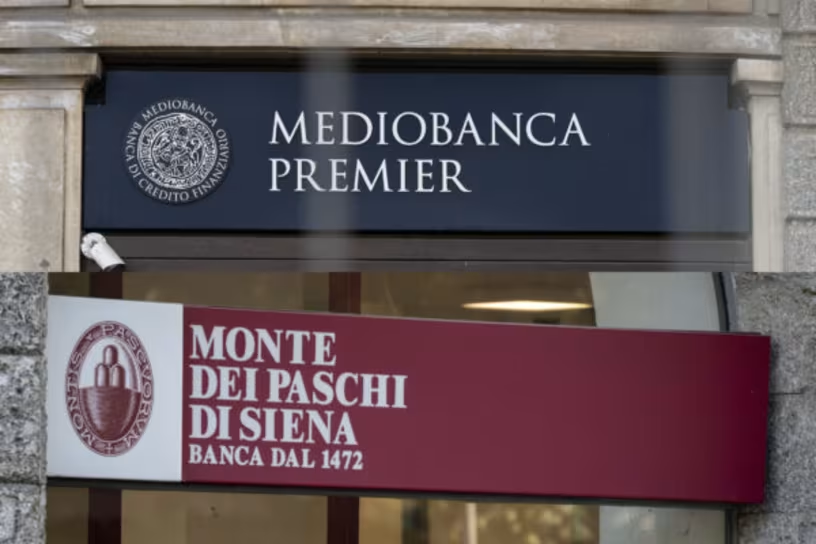
Government support for the creation of a new banking powerhouse has ignited intense political debate, with accusations directed at the Ministry of Economy and suspicions regarding the transparency of the operations. In 2017, MPS was rescued with state funds, and at the time, regulations prohibited it from using public money to acquire other banks. The European Commission has since confirmed that this restriction has ended, legally allowing MPS to pursue acquisitions such as Mediobanca. Prime Minister Giorgia Meloni stated in January that the takeover would create a “third banking powerhouse in Italy, which could play an important role in safeguarding Italians’ savings.” While this declaration reflects clear government endorsement, opposition parties argue that the objectives may extend beyond protecting citizens’ assets. Democratic Party secretary Elly Schlein has openly suggested that the state supported takeovers by groups aligned with the ruling party’s interests.
MPS’ recovery has been remarkable. A few years after receiving a €5.4 billion state bailout that gave the government a majority stake in the bank, MPS surprised many by launching a takeover offer for Mediobanca in January. The bank now holds around 86% of its former Milanese rival’s capital. The operation initially raised doubts, particularly given the size of the acquiring party. As of 2 September, MPS’s market capitalisation stood at €9.7 billion, well below Mediobanca’s €16.5 billion. Alessandro Messina, a banking economist, told Euronews that MPS’s share of the Italian banking system had also declined significantly, from approximately 8% of the loan market in 2008 to around 1.2% in 2023, with its operations primarily serving families and small businesses.

Further concerns arose from the selection of Banca Akros, a relatively small investment bank, to manage the operation, prompting several parliamentary inquiries. Senator Mario Turco from the Five Star Movement was among the first to intervene, stating, “We raised political and EU market rule issues, but Minister of Economy Giancarlo Giorgetti never responded substantively. The issue concerns government involvement, also because it violated commitments made to the EU.” Turco explained that when MPS was rescued, the government had committed to placing the public stake on the market in the event of privatisation, with a deadline of December 2024. Instead, the ministry opted for an extraordinary procedure using Banca Akros, an approach uncommon for transactions of this magnitude. The operation progressed with extraordinary speed, to the point that UniCredit had expressed interest but did not have time to submit a formal offer for Mediobanca.
UniCredit, led by Andrea Orcel, appears to have been effectively excluded from the bidding process, leading the bank to appeal to the administrative courts. Orcel was also heard in a Senate parliamentary inquiry into the Italian banking system, although his testimony was classified, leaving many questions unresolved. The MPS-Mediobanca takeover highlights the intricate intersection of political influence, regulatory frameworks, and strategic ambition in Italy’s banking sector, raising ongoing questions about governance, market fairness, and compliance with European rules.
By fLEXI tEAM


Comments