
HSBC Private Bank Suisse Indicted in France Over Alleged Role in $300 Million Lebanese Central Bank Embezzlement Scheme
French financial prosecutors have formally indicted HSBC Private Bank Suisse on charges of organized money laundering and criminal association, marking a major escalation in a long-running investigation into the alleged diversion of more than $300 million from Lebanon’s central bank.
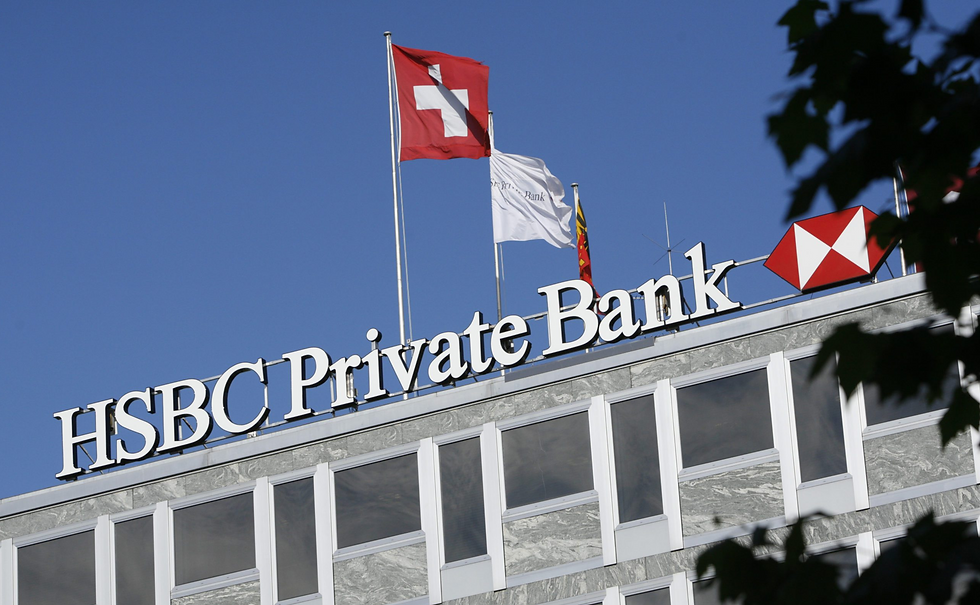
The indictment was issued by the French National Financial Prosecutor’s Office following an extensive two-day interrogation conducted by investigating magistrates.
The case stems from a judicial inquiry launched in July 2021 after anti-corruption organizations filed complaints alleging large-scale financial misconduct and systemic corruption.
As part of the proceedings, French authorities ordered the Swiss subsidiary of HSBC to provide €80 million in bail to guarantee payment of potential future fines and damages while the criminal investigation continues. Prosecutors allege that the bank played a significant role in facilitating the concealment and transfer of funds that were allegedly siphoned from Banque du Liban between 2002 and 2015. The case has become one of the most prominent examples of international scrutiny directed at the anti-money laundering controls of major global financial institutions.
According to investigators, the suspected scheme revolved around commissions paid by Lebanese commercial banks for the purchase of financial products from Banque du Liban. Rather than being retained by the central bank, those commissions were allegedly redirected through an offshore brokerage company known as Forry Associates Ltd., a British Virgin Islands entity established in 2001. Although the company appeared to operate as an independent financial intermediary, investigators claim that the governor of Lebanon’s central bank entered into a contract with the firm in 2002 without disclosing that his brother was its beneficial owner.
Authorities allege that commission payments were deposited into a Swiss dollar-denominated account held by Forry Associates. From there, the funds were reportedly transferred through a network of complex corporate structures spanning several European jurisdictions. Prosecutors contend that this elaborate financial architecture enabled public resources to circulate repeatedly between Europe and the Middle East before being used to acquire luxury real estate assets. Many of those properties were allegedly owned by senior public officials, relatives, and associates connected to the network under investigation.
Evidence compiled in a fifteen-page synthesis report prepared by France’s Central Office for the Suppression of Major Financial Delinquency forms a central pillar of the case. The report draws extensively on information gathered by Swiss prosecutors who tracked the international flow of funds. Financial investigators concluded that HSBC Private Bank Suisse possessed the necessary regulatory, operational, and legal tools required to identify and halt suspicious activity. According to prosecutors, the bank had access to transaction records showing highly unusual patterns regarding both the source and destination of the funds.
Investigators allege that the institution effectively endorsed an opaque network of financial movements by failing to carry out fundamental due diligence procedures.
Authorities argue that the bank's inaction enabled politically connected individuals to accumulate substantial personal fortunes derived entirely from funds flowing through the offshore brokerage.
The indictment extends beyond isolated compliance shortcomings and challenges multiple layers of the bank's organizational structure. According to the judicial record, back-office personnel repeatedly neglected to conduct mandatory verification procedures, including direct contact with the beneficial owner regarding nearly 200 suspicious wire transfers.
Those transfers allegedly involved substantial amounts moving from European accounts back into Lebanon's banking sector.
French magistrates have indicated that senior executives cannot simply attribute the failures to communication breakdowns or a lack of warnings from compliance teams.
Investigators argue that the institution maintained a passive stance despite numerous warning signs indicating the possible diversion of funds from a sovereign central bank.
Prosecutors contend that this prolonged inaction allowed allegedly illicit assets to be integrated into legitimate European financial and real estate markets for more than a decade.
Separate investigations by non-governmental organizations uncovered evidence suggesting that internal compliance alerts were repeatedly disregarded by management. One relationship manager responsible for handling accounts belonging to Forry Associates and its beneficial owner reportedly received unusually large salary increases between 2000 and 2020. Investigators believe these compensation increases may reflect institutional pressure to retain lucrative clients despite heightened money laundering risks.
Transaction reviews also revealed that the relationship manager received a personal transfer of nearly $17,000 directly from the client in 2009. Prosecutors argue that this payment undermined the independence expected of employees responsible for monitoring suspicious transactions. Investigators further allege that business priorities, including profitability and asset accumulation, took precedence over compliance obligations applicable to politically exposed persons.
The legal challenges facing HSBC Private Bank Suisse are not limited to France. Swiss regulators and prosecutors have also pursued enforcement actions connected to the same accounts. The Swiss Financial Market Supervisory Authority imposed a significant regulatory sanction against the bank after identifying serious compliance failures.
Meanwhile, Swiss prosecutors opened a separate criminal investigation focused on organizational deficiencies that allegedly facilitated money laundering.
That Swiss case includes allegations against a senior banking supervisor who managed the relationship with Forry Associates and its principals. Prosecutors accuse the supervisor of aggravated money laundering, alleging active involvement in concealing the origin of the funds. Authorities say the international nature of the investigation reflects the deliberate use of multiple jurisdictions to scatter financial records and complicate oversight efforts.
Luxembourg has emerged as another key jurisdiction in the widening legal campaign.
Authorities there indicted a former relationship manager who oversaw accounts belonging to the central bank governor during 2007 and 2008. According to investigators, the banker received a personal payment of $430,000 from the governor through a private Lebanese account.
The payment allegedly remained undisclosed when the banker later joined another financial institution, where he continued managing the governor's assets. Magistrates noted that the payment represented roughly one-third of the manager's total income during the relevant period. During questioning, investigators challenged the employee's loyalty, suggesting that he had effectively become a representative of the client rather than an employee acting in the interests of the bank.
Authorities across Europe have coordinated efforts to identify, freeze, and seize assets linked to the suspects. German prosecutors announced the seizure of €35 million in financial assets and real estate associated with the principal defendants. That action followed a broader coordinated freeze involving €120 million in assets across France, Germany, and Luxembourg.
French prosecutors have brought charges against at least ten individuals connected to the alleged scheme, including family members, close associates, and prominent figures from the Middle Eastern financial sector. Banque du Liban has now been granted civil party status in the French proceedings and has appeared before investigating judges to provide testimony.
The institution's current leadership described Forry Associates as “an artificial entity designed solely to drain resources.” Officials emphasized that the European investigations are essential for restoring confidence in Lebanon's financial system and identifying accountability for the losses suffered by the central bank and depositors.

According to the current administration of Banque du Liban, the primary victims of the alleged scheme are both the institution itself and ordinary depositors whose funds were affected by the broader financial collapse. The bank has pledged full cooperation with European investigators and committed to providing accounting records and financial documentation necessary for the ongoing proceedings.
Anti-corruption organizations welcomed the indictment as a significant milestone in the global fight against financial impunity. Representatives argued that the case demonstrates the importance of holding international financial institutions accountable when they allegedly provide the infrastructure used to conceal misappropriated public assets. They maintain that banks should not be allowed to profit from questionable funds while relying on corporate structures or compliance failures as a defense.
Legal specialists following the case note that the criminal association charge may have particularly serious implications for the banking sector. They argue that the accusation suggests a level of cooperation with the principal suspects that extends beyond negligence or regulatory oversight failures. Observers also point to the €80 million bail requirement as evidence of the gravity of the allegations and the enormous sums involved.
The principal defendant in the broader corruption case has been the subject of an international arrest warrant issued by French authorities since May 2023. While domestic legal restrictions may ultimately prevent extradition to France, prosecutors are expected to move forward with proceedings. The inclusion of a major international banking institution as a defendant ensures that the upcoming trial will serve as a focal point in the broader effort to establish accountability for transnational corruption and large-scale financial crime.
The investigation has also become a case study for compliance professionals and financial crime specialists. Among the alleged methods identified by investigators are the use of offshore brokerage companies in secrecy jurisdictions to receive unjustified commissions from public institutions; undisclosed beneficial ownership arrangements involving politically exposed persons; direct personal payments from clients to banking employees; circular movements of capital through multiple jurisdictions designed to obscure money trails; and the approval of repeated high-value wire transfers without sufficient supporting documentation or independent verification.
As investigations continue across several countries, prosecutors are seeking to determine not only how hundreds of millions of dollars allegedly moved through the international financial system, but also whether financial institutions entrusted with preventing money laundering knowingly ignored warning signs that could have disrupted the scheme years earlier.
By fLEXI tEAM


Comments