
Europe’s Extreme Summer Heat Threatens to Erase a Year of Economic Growth
Europe’s prolonged spell of extreme summer heat is expected to inflict an economic cost of around €180 billion in 2026, equivalent to roughly 1% of the European Union’s GDP, according to research published by Triodos Bank.
The estimated loss is almost as large as the 1.1% growth that the EU had been expected to achieve this year, raising the prospect that the bloc could end the year close to stagnation.
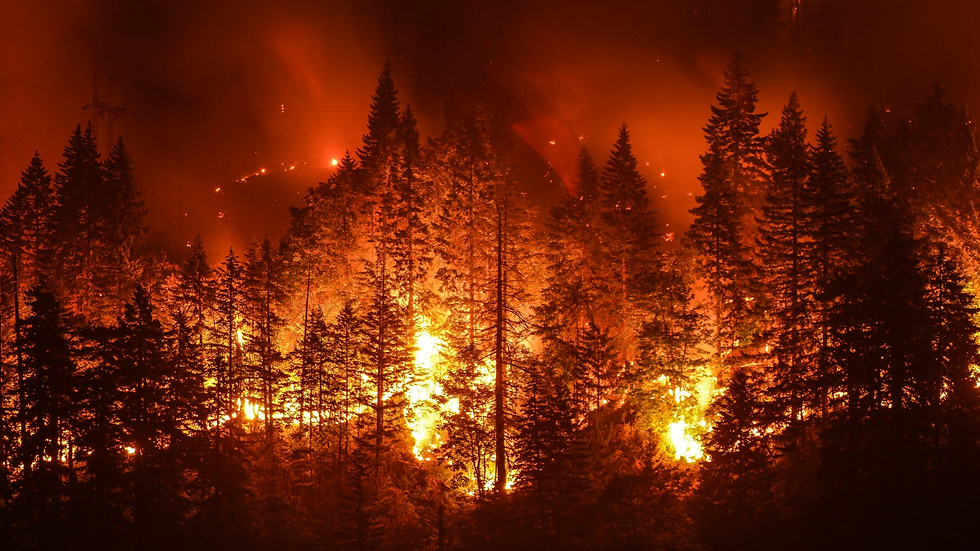
The analysis attributes the losses to a combination of extreme temperatures and wildfires, which are disrupting economic activity across several sectors. The consequences extend from agriculture and energy production to transport and, most significantly, the productivity of workers exposed to excessive heat.
Agricultural losses are expected to account for approximately 0.15% of EU output. Lower crop yields and reduced dairy production are being compounded by the resulting increase in food prices, adding further pressure to economies already facing weak growth.
The energy sector is also being affected. Extreme heat can restrict nuclear, hydroelectric and thermal power generation, while solar panels become less efficient as temperatures rise. At the same time, higher demand for electricity and disruptions to generation are contributing to increased wholesale power prices. Taken together, these effects are estimated to reduce EU economic output by another 0.12% to 0.15%.
Transport represents a further source of economic damage. High temperatures and related disruptions are reducing the capacity of railways, roads and inland waterways, producing an estimated loss of around 0.15% of EU output.
The largest economic effect, however, comes from declining labour productivity, although this is also the most difficult component to measure accurately.
Research indicates that worker output begins to deteriorate when temperatures rise above approximately 25°C to 30°C, with the most severe effects occurring in outdoor and physically demanding occupations. Heat also affects people working indoors, as excessive temperatures can interfere with sleep, concentration and cognitive performance.
A cross-country analysis by Allianz, cited in the Triodos research, estimates that output per hour worked falls by about 3% for every degree above 30°C when such temperatures persist for several days.

France faces the largest economic impact
The countries expected to suffer the greatest economic losses are not necessarily those experiencing the highest temperatures. Triodos' assessment takes into account a broader set of factors, including the proportion of economic activity concentrated in heat-exposed sectors, commuting times, air-conditioning availability and the extent to which populations and businesses have adapted to warmer conditions. These factors are then combined with the number of unusually hot days recorded during the year.
On that basis, France is projected to be the worst affected of the major EU economies, with extreme heat estimated to reduce its growth rate by 1.4 percentage points. Given the country's already weak economic starting point, that could push the French economy into a contraction of approximately 0.6%.
The Netherlands is expected to lose around 0.8 percentage points of growth, potentially leaving its economy broadly flat.
Spain and Italy have some of Europe's most heat-exposed workforces and have experienced significant numbers of extremely hot days. However, the impact of heat on their economies is partly moderated by decades of adaptation to high temperatures.
Poland illustrates the importance of adaptation and weather conditions in determining the economic consequences. Its relatively low air-conditioning penetration and limited acclimatisation make it particularly vulnerable to extreme heat. Nevertheless, Poland has experienced a comparatively cooler summer this year, meaning its economy is still expected to expand by approximately 2.9%.
Human and environmental costs extend beyond GDP
The economic calculations capture only part of the consequences of Europe's extreme summer. The human cost of the heat is largely excluded from conventional GDP measurements.
An estimated 20,400 heat-related deaths occurred in France, Germany, Spain and Italy during the June heatwave alone. When the roughly 25,000 deaths recorded across the summer are assessed in terms of life years lost, the implied economic value of those losses is estimated at between €1.5 billion and €7 billion.
Wildfires are adding another significant burden. More than 490,000 hectares of land had been burned across the EU by the previous week, compared with a 20-year average of 197,000 hectares, according to the European Forest Fire Information System. France has also recorded a record level of wildfire activity.
The destruction of forests and other ecosystems creates costs that are difficult to capture in national economic statistics. The loss of ecosystem services from the burned areas could amount to anywhere between €100 million and €4.6 billion, according to the analysis.
The research also suggests that adaptation measures could significantly reduce the economic damage caused by extreme heat. Improved adaptation could cut productivity losses by approximately 40%, although it would not eliminate them entirely.
The authors stress that their estimates are based on relatively conservative assumptions, meaning the ultimate economic damage could potentially be greater.
Triodos therefore argues that adaptation should not be regarded as a sufficient response on its own. While measures such as improved cooling, infrastructure upgrades and adjustments to working conditions can reduce the immediate effects of heat, the bank maintains that Europe must also take stronger action to reduce greenhouse-gas emissions.
Against that backdrop, the research points to the European Commission’s decision on 17 July to ease the trajectory of its main carbon-pricing scheme, arguing that such a move represents the opposite direction from what is required.
With extreme heat increasingly affecting productivity, infrastructure, energy systems, agriculture and human health, the research presents Europe's 2026 summer not merely as a weather event, but as an economic shock capable of wiping out an entire year of expected growth across the bloc.
By fLEXI tEAM


Comments