
Australia Investigates Alleged A$123 Million Money Laundering Network Using Cryptocurrency And Shell Companies
Australian authorities are investigating an alleged transnational money laundering network suspected of laundering more than A$123 million on behalf of multiple organised crime syndicates through cryptocurrency, shell companies and offshore transfers. The investigation, supported by the Australian Transaction Reports and Analysis Centre (AUSTRAC), highlights the growing role of specialist financial networks that provide money laundering services to other criminal organisations.
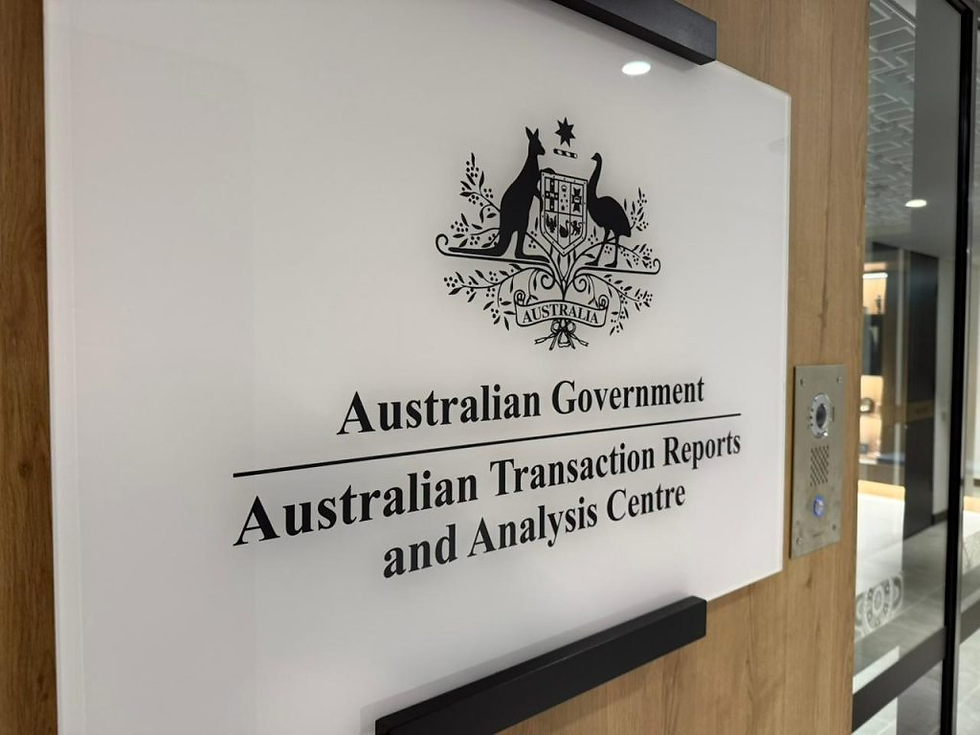
The investigation is being conducted by Taskforce Avarus, an Australian Federal Police (AFP)-led, multi-agency initiative involving AUSTRAC, the Australian Criminal Intelligence Commission and the Australian Border Force. The taskforce focuses on identifying and disrupting criminal networks responsible for moving and concealing the proceeds of organised crime.
According to AUSTRAC, the suspected network allegedly converted cash generated through criminal activities into cryptocurrency and transferred funds overseas using shell companies operating as corporate money mules. The arrangement is believed to have provided financial infrastructure to several organised crime groups, allowing them to move proceeds without directly managing the entire laundering process themselves.
The investigation led to searches at properties in Sydney's Strathfield and Burwood suburbs on 27 October 2026. During the operation, authorities seized approximately A$750,000 in cash, together with luxury handbags and watches, a cash-counting machine and electronic devices. The electronic equipment is expected to undergo further examination as investigators seek to establish the network's activities and identify other individuals involved.
A 40-year-old Sydney man was arrested and charged in connection with the suspected operation. The AFP alleges that he controlled bank accounts held by shell companies and used these accounts to transfer millions of dollars in suspected criminal proceeds, which were subsequently converted into cryptocurrency or remitted overseas.
He faces two charges under Australia's Criminal Code: recklessly dealing with proceeds of crime worth A$10 million or more, carrying a maximum penalty of 15 years' imprisonment, and recklessly dealing with proceeds of crime worth A$100,000 or more, carrying a maximum penalty of 10 years' imprisonment. He was refused bail following his arrest. The investigation remains ongoing, and the allegations have not been established through a criminal conviction.
A particularly significant aspect of the case is the suspected provision of money laundering as a service. Rather than individual criminal groups independently arranging the movement of their proceeds, specialist networks can provide access to corporate structures, bank accounts, cryptocurrency conversion services and international payment channels. This allows criminal organisations to separate the generation of illicit proceeds from the mechanisms used to move and conceal them.
The use of shell companies as corporate money mules can make this process more difficult to identify. A company may appear to have a legitimate commercial purpose and maintain an ordinary banking relationship, while its accounts are actually being used to receive and transfer funds on behalf of unrelated parties. Where several entities are involved, the movement of money can become increasingly difficult to connect to the original criminal activity or the individuals ultimately benefiting from it.
The alleged conversion of cash into cryptocurrency adds another layer of complexity. Cash generated through criminal activities can enter the financial system through corporate accounts before being converted into digital assets and transferred to other wallets or jurisdictions. The combination of traditional banking channels, corporate structures and virtual assets can create fragmented transaction records across different institutions and service providers.
AUSTRAC has emphasised the importance of financial intelligence in identifying these connections. Individual transactions may not immediately reveal a wider criminal arrangement, but information relating to accounts, companies, counterparties and individuals can help authorities reconstruct the movement of funds and identify the infrastructure supporting organised crime.
For banks, payment providers and virtual asset service providers, the case reinforces the importance of assessing whether account activity is consistent with a customer's declared business model. Warning signs may include substantial cash deposits followed by rapid transfers to cryptocurrency platforms or overseas beneficiaries, transaction volumes disproportionate to the company's apparent operations, and multiple entities sharing directors, addresses or other identifying details without a clear commercial explanation.
Customer due diligence should also establish who ultimately controls a company and who benefits from its transactions. Registered ownership and authorised signatories may not necessarily reveal the individuals exercising practical control over an account. Institutions should therefore assess beneficial ownership information alongside the customer's business activities, expected transaction profile and relationships with counterparties.
The investigation also demonstrates why monitoring systems should not treat cash movements, banking transactions, cryptocurrency conversions and international transfers as entirely separate risk categories. A series of transactions that appears ordinary when examined individually may reveal a different risk profile when assessed as part of a connected payment chain. Effective monitoring and escalation procedures should allow institutions to identify material inconsistencies and investigate the economic purpose of transactions.

The case forms part of Australia's broader efforts to address money laundering networks and strengthen oversight of financial services involving virtual assets. Reforms to the Anti-Money Laundering and Counter-Terrorism Financing framework commenced on 31 March 2026, expanding the regulated framework for certain virtual asset services and modernising obligations relating to value transfers. The commencement of individual requirements is subject to applicable transitional arrangements.
The A$123 million figure represents the amount authorities suspect the network laundered; it is not a sum established by a court as criminal proceeds. Similarly, the A$750,000 seized during the searches represents property taken during the investigation and should not be confused with a final confiscation order or the total value of assets recovered.
The investigation illustrates how organised crime can depend on specialist financial intermediaries to convert, transfer and conceal illicit wealth. By targeting the networks that provide these services, rather than focusing exclusively on the criminal activity generating the proceeds, authorities aim to disrupt the financial infrastructure that allows multiple criminal organisations to operate and profit.
By fLEXI tEAM



Comments